
The round of 32 of the 2026 World Cup has arrived. The group stages are over, the calculators have been put away, line-ups have become a thing of the past and now comes football’s favorite phrase: win or go home.
The last 32 of the 2026 World Cup is where fame rises, underdogs become legends overnight, and fans suddenly become tactical experts after watching three YouTube videos.
One mistake can erase weeks of glory, but one magical moment can immortalize a player forever.
This year’s round of 32 will feature heavyweight showdowns, riveting tactical battles and some David-and-Goliath stories that could become World Cup folklore. Here are five games from the 32-game 2026 World Cup that you don’t want to miss.
Japan vs Brazil: Asian Tiki-Taka vs Seleção
Forget about rankings for now.
Japan has quietly become one of the smartest and most disciplined teams in the tournament. After finishing second behind the Netherlands in Group F, the Blue Warriors impressed with their ruthless pressing, lightning-quick transitions and organization that gave elite teams a headache.
Unfortunately for them, their prize in the last 32 of the 2026 World Cup is Brazil.
The Selecao top Group C with talent befitting their famous yellow jersey, producing one of the most entertaining attacks of the tournament while looking increasingly dangerous with every game.
On paper, Brazil are the favorites, but football isn’t played on paper.
Japan have shown at the recent World Cup that they refuse to be afraid of football’s giants. They defend in numbers, counterattack with incredible speed, and their tactical discipline can frustrate even Brazil’s creative stars.
If Japan scores first, will Brazil panic? History shows that Brazil loves to attack, but a stubborn weak defense can sometimes test their patience.
prophecy? Expect fireworks.
Portugal vs Croatia: Experience meets experience
Portugal finished second in Group K, but their journey to the last 32 of the 2026 World Cup was far from convincing.
Portugal looked good for a spell but their performances against Colombia and DR Congo left fans wanting more. The attack was occasionally sporadic, the midfield lacked its usual rhythm and at times the team looked surprisingly vulnerable against the many opponents who expected them to dominate. Such is the danger of judging a team based solely on the standings.
Croatia, meanwhile, took a more difficult route. They battled through a tough Group L to finish second behind England, proving once again that Championship football is their natural habitat. They may not always dazzle, but they rarely beat themselves and if you give Croatia a little distance they turn it into a grueling 120 minutes.
The game felt like a football IQ test. On paper, Portugal arguably has the better squad, while Croatia arguably has better knockout survival skills.
One side has young talent and offensive depth; the other has young talent and offensive depth; the other has a reputation for frustrating teams that thrive under pressure.
Had this match gone to penalties, Croatia might have been smiling.
Netherlands vs Morocco: The knockout match everyone wants
Haven’t we learned our lesson yet?
Whenever people underestimate Morocco, they apologize afterwards. Morocco advanced from Group C to reach the last 32 of the 2026 World Cup with another well-disciplined campaign, proving that their incredible performances in recent international tournaments were no one-off miracle.
Standing in their way to the last 32 of the 2026 World Cup is Netherlands, the Group F champions who won on the back of a stellar performance and one of the strongest defensive records of the tournament.
This game was interesting as both teams thrived without controlling possession. The Netherlands are lethal in transition, while Morocco are masters at frustrating their opponents before striking out in unexpected situations.
However, are Morocco still underdogs, or have they officially earned the right to be considered genuine World Cup contenders?
Whatever your answer is, this has all the makings of a knockout classic.
Tactical intrigue, contrasting styles, passionate supporters, and enough recent history to make every challenge feel personal. Don’t be surprised if the plot lasts longer than 90 minutes. After all, World Cup football has an interesting habit of saving the biggest plot twists for the knockout stages.
You may also like: France 2026: France’s performance shows why they are one of the favorites
Mexico vs Ecuador: Passion, pride and pure chaos
Some games are bound to have drama before the first whistle and this was one of them.
The Mexican team fought its way through Group A to reach the top 32 of the 2026 World Cup, withstanding tremendous pressure from its opponents and once again carrying the hopes of millions of enthusiastic supporters.
Meanwhile, Ecuador advanced from Group E and reached the last 32 of the 2026 World Cup after proving they could compete with technically superior opponents through relentless energy, physicality and fearless attacking football.
Neither team likes to sit back and the fans don’t understand the concept of staying calm. That means neutrals should probably prepare their popcorn, as this could turn out to be one of the fastest and most exciting games of the tournament.
Will Mexico finally triumph in the World Cup or will Ecuador declare themselves South America’s newest knockout team? Either outcome would surprise no one.
Argentina vs Cape Verde: Champions vs Dreamers
Everyone saw the badge and everyone predicted Argentina to win, but that’s what makes this game dangerous.
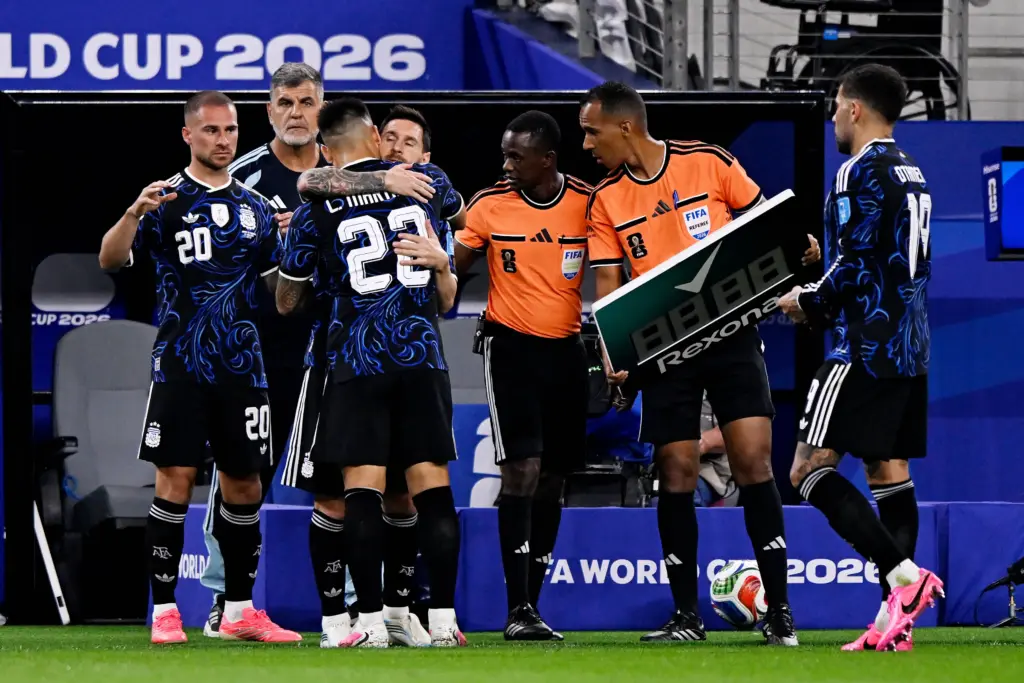
Argentina finished first in Group J with authority thanks to their attacking quality, defensive balance and confidence expected from one of the traditional powers of football.
However, Cape Verde produced one of the biggest surprises of the tournament as they defeated Spain in a hard-fought draw to advance to the last 32 of the 2026 World Cup.
For Cape Verde, it’s not pressure; This is freedom. No one expects them to win, which is what makes them such a dangerous team. Argentina knows that one careless moment can ruin an entire match.
Albiceleste cannot underestimate their opponents as they have absolutely nothing to lose and if Cape Verde somehow pulls off the impossible, the internet may never recover.
Is this a routine part of Argentina’s qualifiers, or is it a game in which giants are dragged into chaos by fearless losers who refuse to abide by the script?
Dreamers may dream, but champions live in reality, and this is where knockout football often provides its toughest lessons.
2026 World Cup Top 32: Full of twists and turns
That’s why we like to introduce the Round of 32 for the 2026 World Cup. No second chances, no safety net, just 90 or possibly 120 minutes plus penalties to decide who continues the chase for football immortality.
Will Brazil remind everyone why they are five-time champions? Can Morocco continue to rewrite football history? Can Portugal’s golden generation finally get what they want? Can Mexico silence the doubters? Will Lionel Messi and Argentina be a reminder that champions don’t play “trap games”? Do they make presentations?
One thing is guaranteed: when the last 32 of the 2026 World Cup begins, there will be heroes, heartbreak, controversy, impossible goals and enough online debate to keep fans busy until the next World Cup.
PakarPBN
A Private Blog Network (PBN) is a collection of websites that are controlled by a single individual or organization and used primarily to build backlinks to a “money site” in order to influence its ranking in search engines such as Google. The core idea behind a PBN is based on the importance of backlinks in Google’s ranking algorithm. Since Google views backlinks as signals of authority and trust, some website owners attempt to artificially create these signals through a controlled network of sites.
In a typical PBN setup, the owner acquires expired or aged domains that already have existing authority, backlinks, and history. These domains are rebuilt with new content and hosted separately, often using different IP addresses, hosting providers, themes, and ownership details to make them appear unrelated. Within the content published on these sites, links are strategically placed that point to the main website the owner wants to rank higher. By doing this, the owner attempts to pass link equity (also known as “link juice”) from the PBN sites to the target website.
The purpose of a PBN is to give the impression that the target website is naturally earning links from multiple independent sources. If done effectively, this can temporarily improve keyword rankings, increase organic visibility, and drive more traffic from search results.