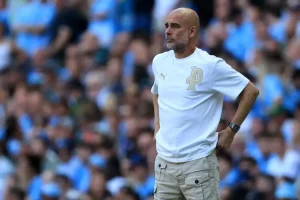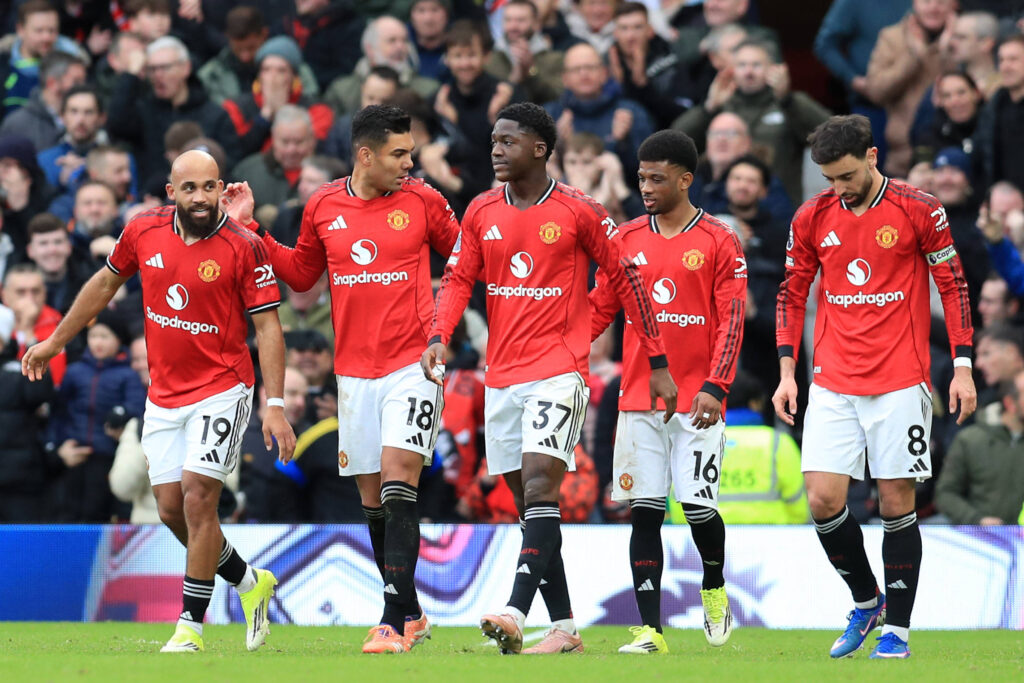

Old Trafford can usually tell early on whether a new era is real or just noise, and United’s 2-0 derby win sounded like purpose rather than noise. Michael Carrick, appointed as interim manager after Ruben Amorim stepped down, faced his toughest test yet – Manchester City – in his first game in charge and the message from the start was unmistakable: Carrick steers Derby to victory by setting the tone, not surviving.
The plan was obvious from the first whistle – and United executed it. United’s intensity is not just talk; it’s real. That’s how they play. They fought for every ball, grabbed every loose touch, and attacked with purpose. Whenever City tried to slow the game down and regain control, United kept the tempo high and applied constant pressure. This is how United win the derby, making people believe but also making them wonder what happens next.
Because even if the outcome is certain, bigger questions remain. When United win a derby like this, it’s easy to chalk it up to emotion and adrenaline. But the view from United fans will be sharper: Is this just a one-off bounce-back with a new manager, or the first sign that it can be sustained?
Manchester United win derby with high intensity
The most obvious shift was in how United dealt with the chaotic parts of the game. Instead of waiting for Manchester City to make a mistake, they waited for Manchester City to make a mistake. They try to make them. Every clearance became a contest, every bounce became a sprint, and United’s intensity turned the intermediary moments into a battlefield United were determined to occupy.
United’s midfield and front line, searching for the second ball as much as they were shooting opportunities, quickly collapsed and crowded the landing zone, forcing City to make hasty decisions. This is not urgent. It was purposeful pressure: to win back and push forward before City’s restart. This sense of urgency was the main reason for Carrick’s derby victory on day one. It gave United a clear identity amid the chaos.
This intensity also satisfies the crowd. Old Trafford reacted to small moments of tackles, tackles and attacks that were rarely highlights but could determine whether United won the derby on their own terms or their opponents’.
City can dominate possession and still lose, but in terms of threat it has rarely looked so one-sided. Although Manchester City ended the game with 68% of the ball possession rate, the danger of the game continued to tilt towards their own penalty area. United produced big moments and the scoreline only told part of the story as United did not allow goals to continually interrupt the din of celebrations.
Donnarumma’s experience in the afternoon highlighted this. He made five saves, proving that United don’t just shoot for the sake of shooting – they constantly get into positions where the goalkeeper has to work. United hit the woodwork twice and, most importantly, the disallowed goal changed the feel of the game: the threat was constant, the scoreline was brutal, and City were forced to defend their own goal more than possession would suggest.
If this game felt like United’s pace rather than City’s, the defensive performance explained why. United had 22 tackles to City’s 12, a blunt but telling measure of United’s intensity. They made contact first, lost the ball quicker and were more willing to turn every City possession into a physical and mental battle. That’s why in the end City had the ball and United were in control – and why United won the derby without having to control possession.
Manchester United sees goals as tactical clues, not flaws
If United’s intensity set the tone, the offside confusion revealed the thinking behind it. Three times Old Trafford thought they had scored and three times the flag dragged the score back – with Amad Diallo, Bruno Fernandes and later Mason Mount all ruled out. Those goals that United were denied were not just frustrating; They demonstrated how aggressively United were trying to outrun City’s defence.
It’s easy to file hastily, but it can also be read as intention. Teams trying to stay safe are rarely on this edge. Manchester United’s early days under Carrick repeatedly attempted to turn the attack into a straight-line threat, repeatedly attacking the space behind Manchester City and repeatedly reaching the back quickly enough to reduce the gap between reward and reset to just a few inches. Offside is the price of this vertical attack. The pattern of United’s disallowed goals suggested a directive: stretch the defence, force a resumption of movement and make the game uncomfortable.
In this sense, the game contains clear tactical instructions. Carrick led Derby to victory but didn’t try to outscore City for long; he tried to put pressure on them. The upside was clear too: when the timing improved, the goal finally worked – United won the derby in decisive fashion, which made the afternoon feel more important than a single result. #
Also read: Marc Gueye to Manchester City: Two reasons why Chelsea will regret not competing for Crystal Palace defender
New manager jumping ship or blueprint?
This is the part that always comes up after a derby win: the temptation to default to an exciting afternoon as the turning point. United have seen bounce-back performances from new managers before – 90 minutes of adrenaline, sharpness and collective support – but these evaporate once opponents adjust and the schedule is tight. When United win the derby, it’s easy to confuse the sprint with the road map.
But the encouraging detail is that this victory comes with repeatable signs. United’s intensity looked organized rather than chaotic. The forward’s performance was direct rather than desperate.
The pattern behind United’s disallowed goal suggested a clear attacking order: run out, threaten space, and let the opponent defend their own goal. These characteristics are not something you stumble upon; They are choices—and choices can become habits.
The question now is whether Carrick can turn this selection into a baseline. If this energy becomes normal – if United’s intensity remains high, if United’s goals conceded turn into scored goals over time, if these thoughts persist even as the initial rush subsides – then this won’t be considered a bounce-back under the new manager. It will be remembered as the first outline of the identity and the day Carrick led Derby to victory and announced the direction.
Agen Togel Terpercaya
Bandar Togel
Sabung Ayam Online
Berita Terkini
Artikel Terbaru
Berita Terbaru
Penerbangan
Berita Politik
Berita Politik
Software
Software Download
Download Aplikasi
Berita Terkini
News
Jasa PBN
Jasa Artikel